
Posted on Fri, Mar 08, 2013 @ 11:57 AM
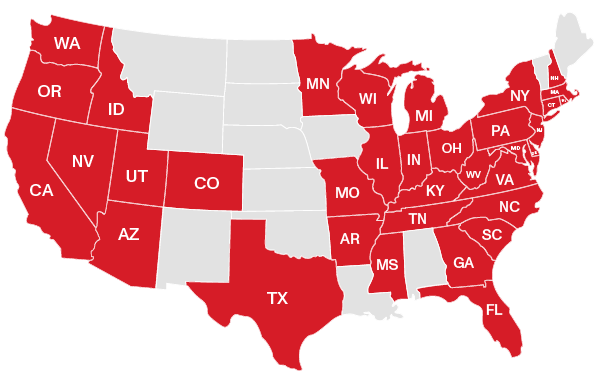
OnTrac, the largest regional parcel carrier in the United States, is proud to announce the addition of Idaho to their service area. OnTrac is now offering its faster delivery service to and from the major metropolitan areas of Idaho. The expansion of Idaho grows their service area to 8 states and 60 million consumers.

From Idaho, customers receive next-day delivery to the metro areas of Idaho, Portland, OR, Northern Nevada and Utah, and Washington. They can also enjoy two-day shipping to Arizona, California, Colorado, Las Vegas, NV and Southern Utah. Now shippers have access to more customers in more states with faster transit times. When shipping to Idaho, customers can save a transit day over national carriers. The best part is that overnight deliveries are performed at Ground shipping rates.
"The addition of Idaho to the OnTrac service area means our customers are now able to ship and receive packages from Boise a day faster than they would with the national carriers," said President Robert Humphrey.

Adding Idaho comes at a great time for online retailers. With more and more consumers turning to an online retail solution, companies are looking for ways to gain an edge over competitors. Regional carriers, like OnTrac, have a Ground shipping footprint that reaches up to Zone 4 destinations next day.
The competitive rates, fewer fees and lower surcharges from OnTrac are all backed by a Money-Back Service Guarantee. To make it even easier for customers, OnTrac Ground uses the same zones as national carriers, so integrating OnTrac into existing shipping workflows will be seamless.
For more , visit our Overnight Shipping to and from Idaho webpage.
About OnTrac
OnTrac is the leader in regional, overnight delivery in the 8 western states. By focusing on regional service, OnTrac reaches more Ground destinations next-day without the added costs of express shipping. Founded in 1991 as a division of Express Messenger Systems, Inc., OnTrac celebrates 22 years of on-time delivery, and offers competitive rates, lower fees, and fewer surcharges. OnTrac is a
SmartWay Transport Partner. To learn more about OnTrac, visit
ontrac.com, or call 1-800-334-5000.
Posted on Fri, Feb 15, 2013 @ 02:34 PM
By Mark Magill
Regular readers of this column know the many benefits of adding regional parcel carriers to their carrier mix. Not only can a shipper significantly reduce their shipping spend, get faster time in transit (including next day delivery at Ground Rates, but they can also increase their productivity by taking advantage of the later pick up times that regional parcel carriers routinely offer. But what does it require to implement a regional carrier, and is it worth the effort? By speaking with a representative of your local carrier, you will discover that it is a surprisingly easy undertaking.
Any change in your business will necessitate some degree of planning, time, and even expense. So you should always perform your due diligence in finding out what implementing a regional carrier will require. One of the most effective methods for doing that is to ask for a list of referrals from your local regional carrier. Ideally, they should come from a company in your industry who has been shipping with that particular regional carrier for some length of time. In addition to asking them how they implemented the regional carrier, ask them what specific benefits compelled them to make the change. You may be surprised at what you learn.

A step by step process for engaging the regional carrier should include providing them with few months of shipping data including package weights pieces per delivery stop and the five-digit delivery ZIP Code information for your shipments. This would enable the regional carrier to determine the true cost of servicing your account and enable them to be the most aggressive in their rate proposal. This cost to serve model is the same one that the national carriers use. When doing your analysis, be sure to include the savings your company would reap by being able to downgrade the shipping mode from Air Express to Ground service in Zone 4 delivery points where the regional carriers can deliver next day at Ground rates over 500 miles from their origin. The savings from this portion of your business can be especially significant. When you have completed the analysis based on the rates that the regional carrier is offering, it should be fairly easy to create a cost/ benefit analysis based on any soft costs you may incur and competitive advantages you receive.
The next step would be to determine how you will process your shipments. A regional carrier of any significant size has their own internally created shipping software that they would gladly supply along with a thermal label printer. But if you are a large shipper you are probably already using multi-carrier shipping software of some kind. The larger regional carriers often have shipping modules for those software providers or if need be can have generic modules created. (if they already do have modules, it is the closest thing to "plug and play" in the parcel shipping IT world). The regional carriers can also directly integrate with your own homegrown legacy system, via API, ODBC or even integrate with the very largest TMS systems.

Finally, having an available dock door is an issue that sometimes arises. The flexibility that is the hallmark of regional carriers can usually alleviate this issue. Since these carriers are by definition regional, they operate in a geographical space that allows them to provide later pick up times. Rather than having a dock door dedicated to them, they can arrange a pull time that occurs after the national carriers have already picked up.
Since DHL pulled out of the domestic shipping market four years ago, there has been a definite need for alternatives to the national carriers. In any industry, a limited number of choices does not best serve the market. It may be well worth your while to investigate the reduced expense and competitive advantages that the regional parcel carriers provide. Adding them to your carrier mix may be much easier than you think!
Posted on Fri, Feb 08, 2013 @ 04:22 PM
For the employees at Nuts.com, the philosophy is (and always has been) simple: treat customers as you’d like to be treated.
It’s modest and unassuming, but it’s this family owned business’ philosophy, and it’s held up for over 80 years.
“We continue the family tradition of providing the same superb quality and service as in the past,” Chief Nut Jeff Braverman said. “Our product selection has grown and our marketing strategy has evolved, but our service has stayed the same. When you place and order, we are going to slam dunk it. We’ve stayed true to the philosophy of ‘treat your customers as you want to be treated’ but these days, we let our personality show.” 
Eighty-four years after Poppy Sol (the company’s first generation nut) opened the Newark Nut Company, selling premium bulk items at the Mulberry Street open air market, Braverman and his cousin David have taken over.
Through the years, the industry has changed—new products have been developed and the demand for a healthy alternative has continued to grow. But as inventory changes, their focus remains the same.
“We’re customers too,” Braverman said. “When we shop or order something online, we have the same expectations as the people who order products from us. We keep that in mind.”
That means satisfied customers from the time they place an order to the time they receive their shipment, and anyone who has ever ordered from Nuts.com knows exactly what that means.
Their packages are all unique—cardboard, with what looks like jokes, hand written in black sharpie, and deals for every occasion.
“We try to go over the top, but we do it in a professional way,” Braverman said. “Our business is very regimented, but it’s fun and we keep it light.”
And although the name may not imply it, Nuts.com is stocked with much more than cashews and almonds.
“We have a really diverse group of customers, because we have a really diverse group of products,” Braverman said. “We started with nuts and dried fruit and now offer gluten free products and specialty powders. We keep discovering new areas and it keeps things interesting.”
The products sell themselves, but the service is what keeps people coming back.
“When you order something online, you want it fast,” Braverman said. “With food, you want it faster. You want instant gratification. People have come to expect fast shipping. It’s not necessarily that people were clamoring for faster shipping—I think everyone wants it. As a customer, I want it, and it all goes back to the philosophy of treating your customers how you want to be treated.”

OnTrac is proud to partner with a company like Nuts.com, offering overnight delivery to six of the seven states in our service area from our Reno, NV location.
“OnTrac’s overnight delivery footprint is amazing,” Braverman said. “It puts the national carriers to shame. And what’s better than forming a partnership with your shipper? There’s synergy. My experience has been so great.”
When the employees at Nuts.com ship with OnTrac, they ship with the confidence that OnTrac will be able to continue their high level of customer service. It is in our ability to provide faster time in transit and keep costs down that keeps customers in our service area satisfied. We are proud to be able to uphold the Nuts.com commitment to quality service from the time it leaves the company’s hands until the time is arrives at a customer’s door.
Posted on Mon, Feb 04, 2013 @ 04:43 PM
Phoenix, AZ- (NASDAQ- Jan 24, 2013) – OnTrac today announced that it was awarded the Best New Vendor “Eggie” award by Newegg Inc., the leading electronics-focused e-retailer in the United States, at the 2nd Annual Eggie Awards at the 2013 International Consumer Electronics Show in Las Vegas. The Eggie, a golden egg trophy, acknowledges the outstanding contributions made by Newegg’s vendor partners in 2012. Presented on January 10, 2013 at XS Nightclub at the Encore Hotel, the Eggies recognized 26 award recipients across 14 categories for supporting Newegg’s continued success.
“This year's Eggie award recipients all made valuable contributions to our business in 2012 and OnTrac is no exception. On behalf of Newegg, I congratulate OnTrac on its Eggie award win and look forward to continuing our successful partnership in 2013,” said Soren Mills, Chief Marketing Officer of Newegg North America.

OnTrac is the leader in overnight regional package delivery, servicing the seven western states of CA, AZ, NV, OR, WA, UT and CO. OnTrac became one of Newegg’s shipping carriers last fall to help provide more efficient shipping and faster time in transit for Newegg’s customers.
“We would like to thank Newegg for presenting us with the Best New Vendor Eggie award. Shipping is a big part of any online business, and we are happy to be able to provide one of our most valued customers, Newegg, with faster delivery times at a lower cost,” Vice President of Marketing, Laura Peterson said.
OnTrac is the fast and affordable way to ship parcels within the Western United States. By focusing on regional service, it reaches more ground destinations next day, and without the added costs of express shipping. Founded in 1991 as a division of Express Messenger Systems, Inc., OnTrac celebrates 22 years of on-time delivery, and offers competitive rates, lower fees, and fewer surcharges.
To learn how OnTrac can help your business, visit ontrac.com, call 800.334.5000.
About Newegg Inc.
Newegg Inc. is the leading electronics-focused e-retailer in the United States. It owns and operates Newegg.com and NeweggBusiness.com, and regularly earns industry-leading customer service ratings. Newegg delivers a world-class e-commerce platform and is committed to serving the online technology community, from tech-enthusiasts to small and medium-sized businesses. Both Newegg.com and NeweggBusiness.com feature a comprehensive selection of the latest computer hardware and consumer electronics products, detailed product descriptions and images, as well as how-to information and customer reviews. Newegg Inc. was founded in 2001 and is headquartered in City of Industry, California.
Posted on Thu, Jan 24, 2013 @ 10:59 AM
Optimized Driver Routes Cut Cost to Customer, Environment
Ground Shipping Goes Green
At OnTrac, being “green” means more than being able to improve the environment—it means we are willing to. The way we see it, we have a corporate responsibility to do what we can, when we can, to help improve the quality of life for customers in our service area.
Since the beginning of our business, over 20 years ago, OnTrac has focused not only on faster shipping, but more efficient ways to deliver packages. As a regional carrier, we are a friendlier option than the national carriers. Our focus on overnight shipping and delivery in the seven western states gives our regional hub-and-spoke model the ability to operate entirely on the ground. By keeping our packages on the ground, we keep costs to customers (and the environment) down. We don’t have to support a worldwide infrastructure, and that saves more than money.
But that’s not all we’re doing.
As a part of our plan to promote a greener operation, OnTrac has made it a point to position its facilities and distribution centers in areas that allow us to optimize driver delivery routes. These facilities boost your bottom line and enhance efficiency throughout our network.
The addition of facilities throughout our service area support growth of the overnight package delivery industry and our company, boosting the quickness and efficiency of the ground network.
Our Menlo Park facility in California services the neighborhoods of Mountain View, Palo Alto, San Mateo, San Bruno, Half Moon Bay, Pacifica, and the San Francisco Airport.
This facility has improved efficiency throughout the Bay Area. By enabling shipments to be distributed closer to their end destination, overnight shipping in California is convenient and cost effective. Twelve dock doors and 50,000 square feet enable the Menlo Park facility to operate with a more rapid parcel throughput rate, and the location puts drivers closer to delivery locations throughout the area, accelerating transit times—in other words, faster shipping at a lower price, with less impact on the environment.
“This facility helps to reduce the time and distance our drivers have to travel to make deliveries, which in turn gets packages to the customer in a more expedient and efficient manner,” said Mark Cronkrite, vice president of operations for OnTrac. “The Menlo Park facility will help us significantly reduce our carbon footprint in the Bay Area,” he added.
Leased trucks enable us to continue to have the newest, most efficient vehicles, greatly reducing our carbon footprint, and our newest partnership with SmartWay gives us an opportunity to set goals for ourselves and our operation, year after year.

With the rapid expansion of our service area, the addition of facilities and optimization of drive routes is important. This way, we can manage growth by spreading the high volume of packages that come through our service area more evenly, increasing efficiency and decreasing emissions by shortening driver routes.
To see more of what OnTrac is doing to go green, visit our OnTrac and the Environment page.
Posted on Tue, Nov 20, 2012 @ 03:37 PM
Shipping costs are one of the biggest expenses for many small businesses, but resourceful entrepreneurs are finding ways to reduce the sting.
Fred DuBois, for example, had been trying to cut the shipping costs at his Laptop Battery Express in Cleveland since he founded it in 2007. Free delivery service for about 50 battery orders a day was costing him as much as $500. He had been relying almost exclusively on FedEx Ground, but this summer, he realized that varying his carriers and using the U.S. Postal Service would cut shipping costs in half. Today, he says, he ships about half his orders with FedEx and the other half with the post office, saving about $250 a day.

To achieve such savings, consider these 10 ways to trim shipping costs:
1. Negotiate with multiple carriers. All shipping companies have pricing schedules based on volume: The more you ship, the lower your rate. But small businesses often don't realize they also may have negotiating power, says Jack Mitchell, president of PANCGroup, a Boston-based parcel appraisal and negotiations consulting firm. If you ship large numbers of packages, compare prices and try to persuade carriers to offer lower rates. "If Fed Ex knows UPS is vying for your business, you've got something to negotiate," Mitchell says.
2. Get suppliers to use your shipping account number. DuBois receives inventory from 12 suppliers, including eight in China and four in the U.S. While he originally had suppliers shipping products to him and invoicing for the transport costs, he managed to persuade his domestic suppliers to ship products on his company's FedEx account number. This not only increases his business's shipping volume, which can lead to cheaper rates, but it also helps prevent suppliers from padding their shipping costs. Kevin Lathrop, president of Unishippers, a Salt Lake City-based company that buys and resells transportation services, recommends including this shipping requirement in your purchase order.
3. Use packaging provided by your carrier. If you use your own packaging, you could face additional "dimensional fees" if your box exceeds the size regulations set by UPS and FedEx. To avoid those extra charges, consider using the packaging provided by your carrier, which doesn't have dimensional fees. By putting a one-pound box into a FedEx envelope, for example, DuBois cut his shipping cost by 15 percent.

4. Consider a regional carrier. Such carriers often provide the same services as FedEx or UPS at a reduced cost, Mitchell says. Regional carriers include Spee-Dee Delivery Service in the Midwest, OnTrac in the West and LoneStar Delivery & Process in Texas. But keep in mind their delivery networks are limited. You also might reduce your bargaining power if you spread your business among too many carriers.
5. Use online shipping. One way to save on U.S. Postal Service costs is to pay for your shipping online. You can save up to 16 percent on priority mail orders and up to 60 percent on express mail, says Beth Fluto, manager of digital media for USPS. You also get free pick-up service, priority mail delivery confirmation and shipping supplies when you pay online with the post office.
6. Invest in prepaid shipping. To help cut FedEx and UPS costs, consider prepaid shipping, which offers a discount rate of up to 20 percent. This means you buy a quantity of shipping labels upfront and affix them to packages as needed rather than pay for each package when you send it out. Prepaid shipping works best when you know you'll be sending out the same weight packages repeatedly and can determine the shipping cost in advance.
7. Buy insurance from a third party. While carriers charge about 80 cents for every $100 of insurance, third-party companies like Parcel Insurance Plan and U-PIC Shipping Insurance charge about 45 cents. The savings can add up, Mitchell notes, if you frequently ship expensive items.
8. Factor in all shipping fees before billing customers. Carriers have more than 75 special charges, including fuel surcharges, fees when requiring a signature from the recipient, or Saturday delivery fees, Mitchell says. If your customers pay for shipping, be sure to include all these extra costs in their bills so you don't end up absorbing them yourself.
9. Consider hybrid services. While they have certain volume, weight and size restrictions, hybrid services like SurePost by UPS and SmartPost by FedEx can cost half as much as standard UPS and FedEx delivery options, Mitchell says. These services pick up packages at your business and ship them by UPS or FedEx to the post office closest to the destination. The local mailman then makes the final delivery. While the cost is less, this extra step can slow delivery time.
10. Ask about association discounts. Find out if your industry's professional association has a partnership with a carrier that offers member discounts. Depending on the size of the association, you could be eligible for discounted rates of up to 50 percent on certain services with carriers like FedEx and UPS.
By: Jane Porter, Entrepreneur
For more information on this article, click here.
Posted on Tue, Oct 16, 2012 @ 02:30 PM
|
The Peak Season Solution
It's Friday, December 21 at 6:00 PM, and you’re the distribution manager of a large e-commerce company. The national carrier’s last truck has just pulled away from your distribution center dock and you’re wondering how you’re going to get all the packages you have yet to process delivered by Monday the day before Christmas. Cyber Monday seems like a distant memory but you’ve still got this last peak season hurdle to surmount. What do you do?
While none of us has the luxury of a time machine to go back and change things, one course of action you could have taken was to add a regional parcel carrier to your carrier mix before the start of peak season. The regional parcel carriers operate in most large population centers and link the major cities of the US with next day delivery at Ground rates at distances up to 600 miles from their point of origin.
As their customers know, flexibility is the hallmark of regional parcel carriers. One of the most competitive features they offer is much later pick up times than the national carriers. That forlorn distribution manager could have had a regional parcel carrier pick up at 8:00 pm and still have satisfied his customers with shipments delivered by Monday December 24th.
 In fact, some regional parcel carriers offer their very largest customers pick-ups on Sunday with delivery on Monday to Zone 4 destinations over 500 miles away. They also offer midnight pick-ups with deliveries that same day to Zone 2 destinations. This level of flexibility can provide your company with a huge advantage over your competitors. The very largest shippers are well aware of this and use regional parcel carriers accordingly.
The reason regional parcel carriers are able to offer this level of flexibility is because they are not tied to huge intra-continental line haul systems. Those networks often involve intermodal transport with limited departure schedules. The regional carriers operate on localized hub and spoke systems that link major metropolitan areas like Minneapolis with Chicago using tractor trailer line hauls with frequent departures.
Implementing the regional parcel carriers is much easier than you might think. They all have IT teams in place to help integrate with your shipping systems. And many of them have partnered with multi-carrier shipping software providers to create shipping modules that are the closest thing to plug and play in the shipping system world. And if you are concerned about limited dock door space, keep in mind that since the regional carriers can pick up much later than the national carriers, you can arrange a time for them to come after the national carriers have already departed from your facility.
Now is the time to contact your local regional parcel carrier. The clock is ticking, it’s now October and on the day I wrote this article, there were only 55 shipping days left until Christmas!
For more information and to view this and other articles, click here.
Author: Mark Magill, Director of Business Development, OnTrac |
Posted on Tue, Oct 09, 2012 @ 11:25 AM
Regional parcel carriers give you the next-day delivery edge!
Last week our Director of Business Operations, Mark Magill, spoke at the Council of Supply Chain Management, where more than 3,000 professionals in logistics and supply chain management met at the Annual Global Conference to learn how to cut supply chain costs, network with colleagues from all over the world, and discover new and innovative supply chain ideas.
His presentation included information on the online retail industry and gave shippers an idea of what to do when offering free shipping is not enough.
The online retail industry passed the $200 billion mark in the 2011 revenue estimates released last month. Projections show it will grow by another 60 percent in the next five years and cross the $300 billion threshold by 2016. These are staggering figures when you consider that e-Commerce still only comprises about seven percent of retail sales.
This has had a profound impact on the parcel delivery market. An industry once dominated by the commercial segment has been inundated by business to consumer deliveries. At last count, it had exceeded 40 percent of all shipments and it is relentlessly approaching the halfway point. The fiercely competitive e-Commerce landscape has caused free shipping to become an almost standard offering on most websites. This has caused the volume of postal consolidators to spike up sharply because they are the lowest cost shipping method. But what are your alternatives when free shipping is not enough to satisfy the demands of your customers?
The seven to ten day delivery commitment offered by postal consolidators may be a satisfactory option for inexpensive items ordered online (sometimes humorously referred to as “cheap and cheerful’). But what are the realities when your customer is ordering an expensive piece of apparel like a $700 leather jacket? Is it worth the risk of buyer’s remorse with that type of high margin item? And what about the risk of shopping cart abandonment if they need the apparel for a special occasion and balk at the high cost of the express shipping option on your website? These issues become even more critical when dealing with the Generation Y/Millennial consumers who have an expectation of overnight delivery without being willing to pay extra for it.
However, there are viable solutions to these issues in major metropolitan areas of the United States. To gain a sharper insight into these solutions, let’s first examine the term Mega-region. A Mega-region is a geographical area where a large portion of the U.S. population is concentrated. A good example of this is California. It is home to more than thirty seven million people. Other examples are the Phoenix Sunbelt, Cascadia (the Seattle/Portland I- 5 corridor), the Front Range of Colorado and the Boston to Washington D.C. Corridor. The population of these Mega-regions totals nearly 200 million consumers and the overwhelming majority of e-Commerce deliveries are shipped to them.
The solution to your faster time in transit requirements are the regional parcel carriers that are located in most Mega-regions. These carriers have a next-day Ground delivery footprint that is much larger than that of UPS and FedEx. They offer guaranteed next-day delivery to Zone 4 destinations as far as 800 miles from point of origin. For example, with a distribution center in Reno, NV, you could provide your customers the option of, not only overnight delivery in Nevada, but overnight shipping from Seattle to Phoenix. The best part about it is these overnight deliveries are performed at Ground rates. This makes free shipping with faster time in transit a much more cost effective advantage to offer to your customers.
Last year I had an in-depth conversation about online delivery needs with the vice president of a very large e-Commerce company. When I asked him his opinion about regional parcel carriers, he mentioned that the regional carriers should talk about nothing but faster time in transit because it has become such a competitive factor. He wanted me to talk about , or ground shipping in Arizona. The largest Internet retailers are continually raising the bar with faster deliveries. Not every company can afford to locate a distribution center in every state, but every company that wants to remain competitive can strategically place two distribution centers in the most effective locations to take advantage of the faster time in transit that the regional parcel carriers provide. Some of the regional parcel carriers linking those Mega Regions are OnTrac in the seven largest western states, Eastern Connection in the Northeast, Lone Star Overnight in Texas and SpeeDee Delivery in the Midwest.
To learn more about our overnight delivery service, please visit any one of our OnTrac Ground information pages.
Posted on Thu, Oct 04, 2012 @ 03:25 PM
The 2012 PARCEL Forum will shine the spotlight on regional parcel carriers with multiple themed tracks and educational sessions. The regional carriers advertise many benefits over the national carriers including cost savings, greater service options including same day delivery, and custom/specialized solutions. Is your business a candidate for regional carrier services?
To better understand the regional carrier market, its advantages and potential disadvantages as well as shipper’s experiences using regional carriers, the PARCEL team once again partnered with the parcel industry experts at Shipware. PARCEL will publish the results of the “2012 Shipper’s Survey on Regional Parcel Carrier Usage” in the October edition, and Shipware will unveil survey results at the Parcel Forum.
Here’s a teaser, but look for the full results at the PARCEL Forum and in the September/October issue of PARCEL.

Like the name implies, regional carriers serve a specific region within the U.S. offering reliable package delivery services similar to FedEx and UPS. Regional carriers such as Eastern Connection, Lone Star Overnight, OnTrac, Spee-Dee Delivery and Pitt-Ohio cover more than 80% of the U.S. population and specialize in short-haul delivery (typically up to 500 miles). (To view the OnTrac Service Area, click here.)
Regional carriers can offer cost savings of 10% to 40% over UPS and FedEx pricing. As an example, Spee-Dee Delivery’s pricing starts at $3.79 for next-day delivery of a 1-pound package within Zone 2. Compared with UPS and FedEx’s minimum charge of $5.49, shippers would save 31%.
Since regionals concentrate operations in a well-defined geographic market, service to that market is often better than what the national carriers provide. For example, Eastern Connection handles East Coast deliveries from Maine to Virginia, all included as “next day” delivery points. Using FedEx and UPS Ground service, the same coverage area extends to five zones for 1-4 day delivery.

Survey respondents listed the following responses as “benefits realized to regional carrier usage”: Larger next day delivery footprint; Better service than nationals; Cost savings; Fewer surcharges; Better billing terms; Better sales rep; Improved reporting; Better dimensional divisor; Better or no minimum charge; Improved customer service; Specialized/Custom solutions; and Same day options.
Despite the many advantages, shippers are largely unaware these carriers exist. Only 39% of survey respondents reported using regional carriers, and two-thirds of that group ship less than 5% of their overall volume via regionals.
Are there any downsides to shifting parcels away from national carriers in favor of regional carriers? Is service up to par? What about customer service, caliber of the driver, automation, reporting and tracking? And just how much are the reported cost savings?
The complete survey results will reveal opportunities for shippers as well as potential mistakes to avoid. Again, look for the full results in the September/October issue of PARCEL. See you at the PARCEL Forum!
Rob Martinez, DLP is President & CEO of Shipware LLC, a parcel auditing and consulting company based in San Diego, CA. He welcomes questions and comments and can be reached at rob@shipware.com.
Posted on Thu, Jun 28, 2012 @ 02:56 PM
To some, patience is a virtue, or a way of life. It keeps them calm and allows them to manage the day-to-day more effectively.
To others, waiting is a hassle, and a waste of time.
Having to wait doesn’t fit everyone’s schedule, and in a world where timing is everything, assuming a customers' patience could be costing you in more ways than you think. Online shopping is supposed to be convenient, and consumers are expecting to be able to navigate fast and effectively.
It’s the main reason people are closing out instead of checking out, or abandoning their carts.
According to a recent month-long comScore study of 3,100 respondents, each of whom were required to have made at least 2 online purchases within a 3 month period, online shoppers are for the most part satisfied, but there is definitely room for improvement.
The study also stressed the importance of logistics in the customer satisfaction equation. For instance: when comparison shopping, consumers often value shipping costs at the same weight as the actual price of the product. You may offer free shipping, but speed is just as important: 38% of shoppers want their purchases faster, and 33% of those surveyed were willing to pay a nominal fee for expedited shipping.
To learn more about how integrating a regional carrier like OnTrac into your logistics network can save you time and money, while keeping your customers happy, view the infographic below:
Download the original study: What Factors Influence the Online Shopping Experience?